Introduction: The Colossus of the National Mall
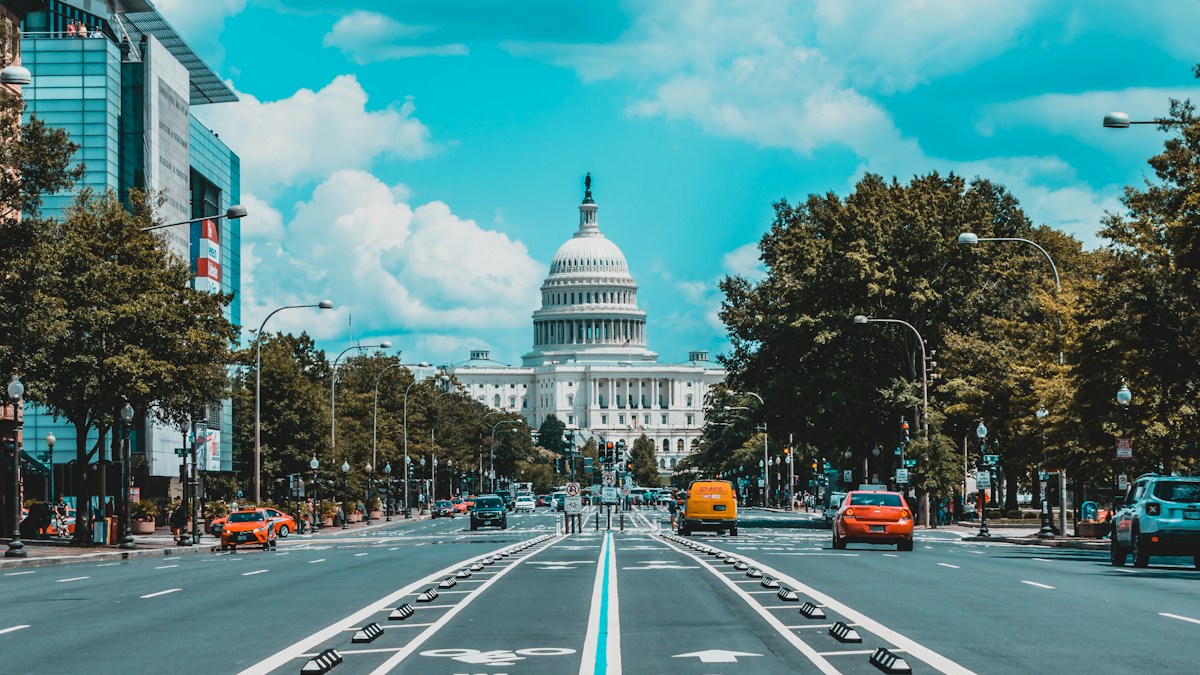
Spanning the monumental green promenade of the National Mall in Washington, D.C., and extending across research facilities worldwide, the Smithsonian Institution is the undisputed colossus of global cultural and scientific enterprise. Comprising twenty-one world-class museums, nine dedicated research centers, the National Zoological Park, and a staggering collection exceeding 155 million cataloged artifacts, works of art, natural history specimens, and scientific archives, the Smithsonian is officially the largest museum, education, and research complex on the planet.
Yet the origins of this uniquely American national institution rest upon an enigmatic British will. In 1826, an English chemist and mineralogist named James Smithson—who had never once set foot on American soil—bequeathed his entire fortune to the United States to found at Washington ‘an establishment for the increase and diffusion of knowledge among men.’ From Smithson’s visionary bequest arose an unprecedented institutional ecosystem where public admission is unconditionally free, where cutting-edge astrophysical research operates alongside public displays of the Apollo 11 lunar module, and where the national memory of the American people is permanently stewarded. This comprehensive treatise explores the history, architectural anchors, scientific expeditions, and democratic mandates of the Smithsonian complex.
1. The Enigmatic Genesis: James Smithson’s Visionary Bequest
The birth of the Smithsonian Institution was unprecedented in the annals of international philanthropy and governance:
The Illegitimate Son and the Bequest of 1826
James Smithson (1765–1829) was the illegitimate son of Hugh Percy, the 1st Duke of Northumberland, and Elizabeth Hungerford Keate Macie, a wealthy descendant of King Henry VII. Barred by his illegitimate birth from inheriting his father’s noble titles or political office, Smithson dedicated his life to scientific chemistry and mineralogy, publishing pioneering papers on calamines (the zinc carbonate mineral smithsonite is named in his honor). In his will, Smithson stipulated that if his nephew died without heirs, his entire fortune would pass to the United States of America to establish an institution bearing his name.
The Congressional Debate and John Quincy Adams
In 1835, following the nephew’s death, President Andrew Jackson dispatched diplomat Richard Rush to London. Rush returned with 105 sacks containing 104,960 British gold sovereigns (worth over $500,000 at the time—an astronomical sum equal to 1/66th of the entire US federal budget). A ferocious eight-year debate erupted in the US Congress: Senator John C. Calhoun argued that the federal government lacked constitutional authority to accept foreign bequests, while former President John Quincy Adams championed the gift, passionately arguing that Congress was morally bound to execute Smithson’s noble vision. On August 10, 1846, President James K. Polk signed the legislation chartering the Smithsonian Institution.
Joseph Henry and the Mandate of Basic Science
The Smithsonian’s first Secretary was renowned physicist Joseph Henry (pioneer of electromagnetism). Henry firmly believed the institution should not squander its endowment on grand buildings or popular curiosities, but should prioritize pure, basic scientific research, meteorological observation networks, and international scholarly publication exchanges. Under Henry’s leadership, the Smithsonian laid the foundations of the US National Weather Service and launched major scientific expeditions to map the North American continent.
James Smithson’s brief, poetic mandate—’for the increase and diffusion of knowledge’—remains the guiding compass of the institution: ‘increase’ representing original scientific and scholarly research, and ‘diffusion’ representing free public education, publications, and museum exhibitions.
2. Architectural Anchors: From the Norman Castle to Modernist Landmarks
The physical presence of the Smithsonian on the National Mall represents an architectural panorama of American civic design:
The Smithsonian Castle (1855)
Designed by architect James Renwick Jr. (who later designed St. Patrick’s Cathedral in New York), the Smithsonian Institution Building—universally known as ‘The Castle’—was completed in 1855. Constructed from distinctive reddish-brown Seneca sandstone in a picturesque Norman Romanesque and Gothic revival style, the Castle featured nine towers, castellated parapets, and grand vaulted halls. Today, it serves as the administrative headquarters and historic heart of the entire complex, housing James Smithson’s crypt in an intimate marble chapel near the entrance.
The National Museum of Natural History (1910)
Designed by Hornblower & Marshall in the monumental neoclassical Beaux-Arts style, the Natural History Museum on the north side of the Mall is anchored by a soaring green granite dome and a majestic central rotunda dominated by ‘Henry’, a 14-foot-tall African bush elephant. Housing over 146 million specimens—from dinosaur fossils to deep-sea invertebrates and the legendary 45.52-carat blue Hope Diamond—it is the most visited natural history museum in the world.
The National Air and Space Museum (1976)
Opened on July 1, 1976, for the American Bicentennial, Gyo Obata’s sleek modernist building of marble and glass became an instant global phenomenon. Housing the authentic physical machines that conquered gravity—the original 1903 Wright Flyer, Charles Lindbergh’s Spirit of St. Louis, and the Apollo 11 Command Module Columbia—the museum celebrates human technological audaciousness. Its companion Steven F. Udvar-Hazy Center in Chantilly, Virginia, shelters colossal aerospace giants, including the Space Shuttle Discovery and an Air France Concorde.
The National Museum of African American History and Culture (2016)
Designed by visionary British-Ghanaian architect Sir David Adjaye, the NMAAHC opened in September 2016 as a crowning architectural and moral triumph. Its striking three-tiered bronze-colored filigree lattice facade (the Corona) is inspired by traditional Yoruba sculpted column capitals. The building takes visitors on an emotionally searing physical ascent: beginning in subterranean galleries chronicling the brutal transatlantic slave trade and Jim Crow segregation, ascending through the Civil Rights movement, and culminating in soaring upper galleries celebrating African American artistic, musical, and athletic triumphs.
3. Comparative Matrix: Flagship Museums of the Smithsonian Complex
The following analytical matrix outlines the collection profiles, locations, and flagship holdings across prominent Smithsonian museums:
4. Scientific Research and Conservation Beyond the Galleries
While millions know the Smithsonian through its public Mall museums, the institution operates as a global scientific powerhouse:
The Smithsonian Astrophysical Observatory (SAO)
Headquartered in Cambridge, Massachusetts, in partnership with Harvard University, the SAO operates ground-based optical and radio telescopes worldwide and manages NASA’s orbiting Chandra X-ray Observatory. Smithsonian astrophysicists were founding members of the Event Horizon Telescope team that captured the historic first-ever direct image of a supermassive black hole.
The Smithsonian Tropical Research Institute (STRI)
Based in the Republic of Panama, STRI is the world’s leading research center for tropical biodiversity and evolutionary biology. For over a century, international scientists have utilized STRI’s marine and terrestrial canopy field stations in Barro Colorado Island to study rainforest ecology, climate change mitigation, and evolutionary genetics.
The Museum Conservation Institute (MCI)
Located at the Museum Support Center in Suitland, Maryland, the MCI provides advanced materials science support across all Smithsonian collections. Using gas chromatography-mass spectrometry (GC-MS), Raman spectroscopy, and 3D laser profilometry, MCI scientists analyze ancient metallurgical corrosion, identify toxic historical pesticides on Indigenous textiles, and develop non-destructive methods to conserve spaceflight polymers exposed to cosmic radiation.
5. Diagnostic Curatorial Guidelines: National Memory and Accountability
Smithsonian curatorial leadership addresses national controversies and collections challenges using this diagnostic protocol:
Challenge 1: Conserving the Original Star-Spangled Banner Flag
- Symptom: The historic 30-by-34-foot wool garrison flag that flew over Fort McHenry in 1814 suffered from century-old stitched backing stress, light fading, and fiber brittleness.
- Conservation Remedy: Conservators completed a decade-long conservation project: clipping 1.7 million stitches from an old linen backing under microscopes; cleaning fibers with deionized ultrasonic vapor; and installing the flag in a state-of-the-art sealed climate chamber maintained at 50% RH and an ultra-low 1 to 3 lux illumination with zero UV.
Challenge 2: Balancing National Patriotic Narrative with Historical Trauma
- Symptom: Exhibitions addressing sensitive military history (e.g., the 1995 Enola Gay controversy regarding the atomic bombings of Japan) provoke intense political and veteran pushback.
- Curatorial Remedy: Anchor exhibitions in multi-perspective primary documentation; balance combat technological engineering with the human consequences of warfare; and consult extensively with military historians, veterans, and civilian advisory groups before opening.
Challenge 3: Repatriating Indigenous Ancestral Remains Under Federal Law
- Symptom: Historical physical anthropology holdings contain tens of thousands of Native American skeletal remains collected without consent in the 19th century.
- Curatorial Remedy: Enforce the National Museum of the American Indian Act (which predated NAGPRA); maintain a proactive Repatriation Office; conduct extensive genealogical consultations; and return ancestral remains and sacred objects to tribal nations unconditionally.
6. Frequently Asked Questions (FAQ)
Why is admission to all Smithsonian museums completely free?
In accordance with James Smithson’s founding vision of ‘the increase and diffusion of knowledge among men’ and reinforced by substantial federal appropriations from the US Congress (which covers approximately 60% of operational costs), the Smithsonian maintains unconditional free admission to all of its permanent Mall museums and the National Zoo, ensuring cultural and scientific access for all citizens regardless of wealth.
What is the Hope Diamond and is it really cursed?
Donated by jeweler Harry Winston in 1958 (sent to the Smithsonian through ordinary registered first-class mail in a plain brown paper wrapper for $2.44 postage), the Hope Diamond is a legendary 45.52-carat deep blue diamond exhibiting intense red phosphorescence under UV light. While 19th-century sensationalist newspapers fabricated a mythic ‘curse’ claiming owners met tragic deaths, historians confirm the curse was an advertising fiction invented by Parisian jewelers to increase its celebrity value.
How many buildings make up the Smithsonian complex?
The Smithsonian complex encompasses twenty-one museums and galleries, the National Zoo, and numerous research centers. Nineteen museums are located in Washington, D.C. (eleven directly on the National Mall), two museums are in New York City (The Cooper Hewitt Smithsonian Design Museum and the George Gustav Heye Center of NMAI), and the Udvar-Hazy Center is in Virginia.
What is the Smithsonian Open Access initiative?
Launched in February 2020, Smithsonian Open Access released more than 4.5 million 2D digital images and 3D models into the public domain under Creative Commons Zero (CC0). Anyone worldwide can download, analyze, remix, and commercially utilize these digital assets with zero copyright restrictions.
What is the Museum Support Center in Suitland, Maryland?
The Museum Support Center (MSC) is the Smithsonian’s massive off-site collections storage and research campus. Spanning 4.5 acres across five specialized ‘pods’, MSC provides zigzagging miles of climate-stabilized storage racks, nitrogen-freezer bio-banks, and world-class conservation laboratories where the 98% of Smithsonian holdings not on public display are preserved for scientific research.
How does the Smithsonian select new museums to build?
Creating a new Smithsonian museum requires an Act of the United States Congress. In December 2020, Congress officially authorized two new national museums: the National Museum of the American Latino and the Smithsonian American Women’s History Museum, which are currently undergoing site selection and architectural development along the National Mall.
What was the 1865 Smithsonian Castle fire?
On January 24, 1865, a catastrophic fire swept through the upper floors of the Smithsonian Castle caused by improperly installed stove flues. The fire destroyed James Smithson’s personal diaries, letters, mineral collection, and hundreds of irreplaceable oil portraits of Native American leaders painted by John Mix Stanley, leading Joseph Henry to rebuild the Castle with fireproof masonry iron construction.
Conclusion: The Democratic Heart of Human Inquiry
The Smithsonian Institution is the living embodiment of an audacious democratic ideal: that human knowledge, scientific inquiry, and cultural heritage should be pursued without boundaries and shared unconditionally with all humanity. By preserving our deepest origins, celebrating our artistic heights, and pushing the frontiers of cosmic exploration, the Smithsonian ensures that James Smithson’s luminous gift will diffuse light across generations for centuries to come.